Video Commerce: How Live Video Turns Browsers into Buyers

Video commerce means selling through live video. It comes in two forms: live shopping, where a host streams to many viewers who can ask questions and buy during the show, and one-to-one video selling, where a shopper books or starts a video call with an expert. Live shopping builds reach and excitement; one-to-one video closes high-value, high-consideration sales.
Key takeaways
- Video commerce has two forms: one-to-many live shopping and one-to-one video consultations.
- Live shopping suits launches, drops and products that need a demo.
- One-to-one video suits high-value items where shoppers want advice before they pay.
- Pair video with messaging: invites, reminders, payment links and follow-ups.
- Measure conversion and order value from video sessions against the rest of your store.
A product page can show photos, specs and reviews. It cannot answer "will this sofa fit through my door?" or "how does this fabric look in daylight?" For many purchases, that last question is the one that decides the sale.
Video commerce puts a person back into online buying. This guide explains its two main forms, where each pays off, what you need to run them, and how to measure the result.
What is video commerce?
Video commerce is selling products through live video inside your website or app. It covers live shopping streams to many viewers and private video calls between a shopper and a sales expert.
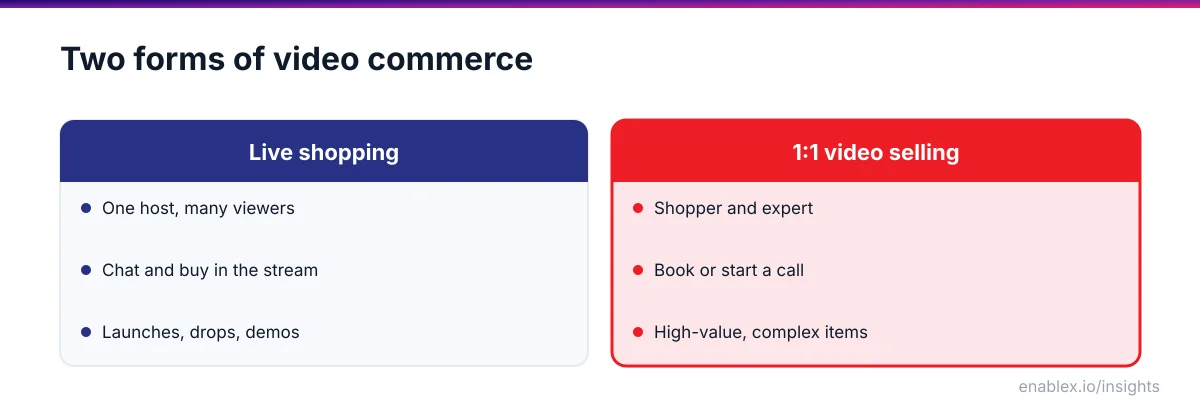
What the figure shows: Two forms of video commerce: Live shopping (one host, many viewers, chat and buy in the stream, launches, drops, demos); 1:1 video selling (shopper and expert, book or start a call, high-value, complex items).
How does live shopping work?
A host, often a brand expert or creator, streams a show from your site or app. Viewers watch, ask questions in chat, and add featured products to their cart without leaving the stream. A few guests can be brought on camera, while thousands watch the broadcast.
Under the hood, an interactive room carries the host and any guests, and the show is pushed to a large audience through HLS or RTMP streaming. The stream can be recorded and replayed later as shoppable video, so the show keeps selling after it ends.
How does one-to-one video selling work?
A shopper taps "Talk to an expert" on a product page, or books a slot. A sales expert joins from a console that shows the shopper's cart and browsing history. They can show the product on camera, share their screen to compare options, and send a payment link in the chat.
Category | Why 1:1 video helps |
|---|---|
Furniture and home | Show size, finish and fabric; check fit in the shopper's room on their camera |
Jewelry and watches | Show detail and scale on a real hand; build trust for a large purchase |
Consumer electronics | Compare models, answer setup questions before the sale |
Cars and two-wheelers | Walk-around tours and finance questions before a test drive |
Fashion and beauty | Styling advice and shade matching |
Real estate | Live property tours for remote buyers |
How do you get shoppers to the video?
Video only sells if people show up. The invite, the reminder and the follow-up do as much work as the call itself.
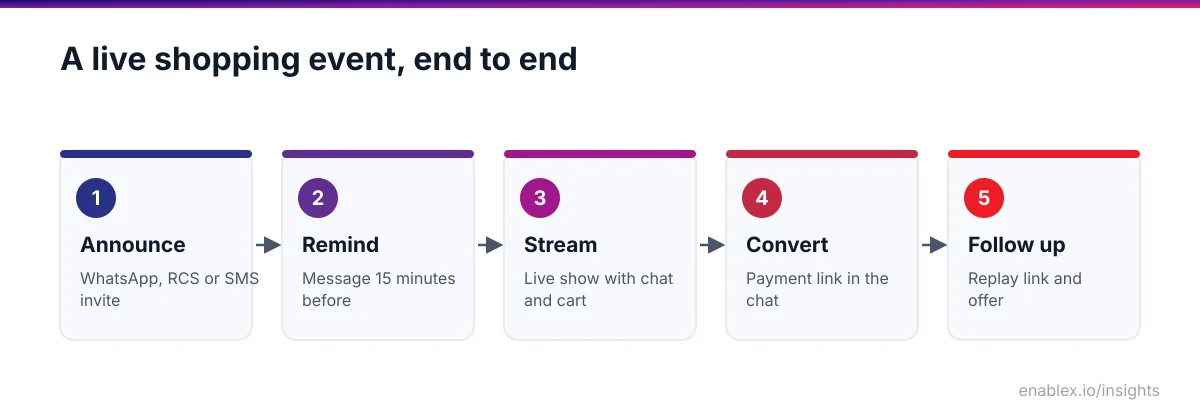
What the figure shows: A live shopping event, end to end: 1) Announce: WhatsApp, RCS or SMS invite; 2) Remind: message 15 minutes before; 3) Stream: live show with chat and cart; 4) Convert: payment link in the chat; 5) Follow up: replay link and offer.
- Send invites with a rich card on RCS or a WhatsApp message with a "remind me" button, falling back to SMS.
- Remind registered viewers shortly before the show starts.
- Send the replay and a time-limited offer to people who registered but did not join.
- For one-to-one calls, follow up with a summary and a payment link if the shopper did not buy on the call.
What should you measure?
- Conversion rate from video sessions, compared with the same products sold without video.
- Average order value for video-assisted orders.
- Show attendance as a share of registrations.
- Replay sales in the days after a live show.
- Returns rate for video-assisted orders; better advice often means fewer returns.
What do you need to run video commerce?
- A video platform that embeds in your store, so shoppers watch and buy without leaving your site or app.
- Streaming for large audiences (HLS or RTMP) plus interactive rooms for hosts, guests and one-to-one calls.
- A host or expert team with product knowledge and clear hours.
- A sales console that shows the shopper's cart and lets the expert send a payment link.
- Messaging for invites, reminders, payment links and follow-ups.
- Recording for replays, training and quality review.
How do you start?
- Pick one category where shoppers already ask many questions before buying.
- Run one-to-one video first with a small expert team; it needs no audience building.
- Add live shows for launches once you have hosts and a list of interested shoppers.
- Compare results with the same products sold without video for one month.
How EnableX helps
The EnableX Video API supports both forms: interactive rooms with screen share for one-to-one selling, and HLS streaming for large live shopping audiences, with recording for replays. It embeds into your website or app, so the shopper never leaves your store.
On the same platform, the Unified Messaging API sends invites, reminders and payment links over WhatsApp, RCS and SMS with automatic fallback. See more in Retail and E-commerce.
Ready to sell on video? Start with one product category and one expert team, then grow from what converts.
Frequently asked questions
What is video commerce?
Selling products through live video inside your website or app, either as live shopping streams to many viewers or as one-to-one video calls with a sales expert.
What is the difference between live shopping and video selling?
Live shopping is one host streaming to many viewers who can chat and buy. One-to-one video selling is a private call between a shopper and an expert, used for high-value or complex purchases.
Which products sell best on video?
Products that need a demo or advice: furniture, jewelry, electronics, cars, beauty, fashion and property.
Do shoppers need an app for a video shopping call?
No. A browser-based video call can start from a button on a product page or a link in a message.
How do you measure video commerce?
Compare conversion and order value for video sessions with your normal store, and track attendance, replay sales and returns.
Founder and CEO, EnableX
Pankaj Gupta has spent 25+ years building IT and telecom businesses across Asia-Pacific and global markets. EnableX is his third company; the first two were built from zero and acquired by global companies. He also invests in B2B startups and mentors founders across the region.
Connect on LinkedIn →